Thomas Edison National Historical Park in West Orange, New Jersey, encompasses Edison’s last laboratory complex and Edison’s home, the nearby Glenmont Estate. Probably best known as the inventor of the incandescent light bulb, Edison was a prolific inventor from his youth until his death. In his lifetime he earned 1093 U.S. patents!
Disclosure: This post may contain affiliate links. Using these links may earn me a small commission but will not cost you anything.
Thomas Edison National Historical Park has free parking, but the site itself requires either a national park pass (which provides entry for up to 4 people) or a $15 per person (15+) fee. This fee provides access to both the laboratory complex and Glenmont Estate.
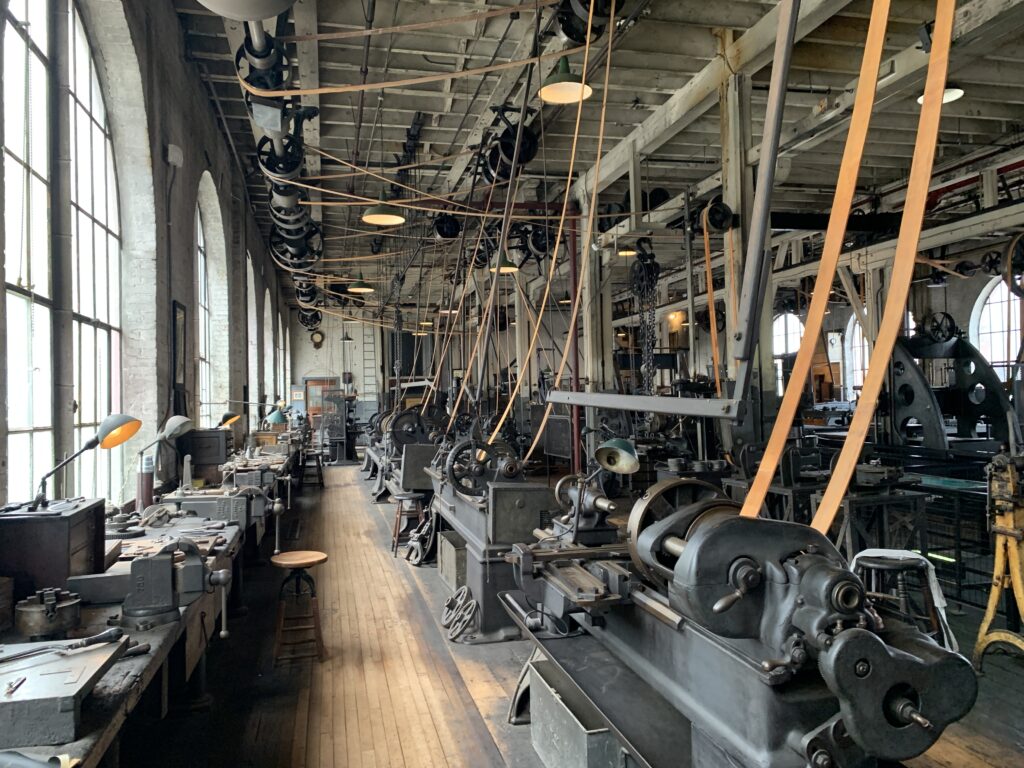
The laboratory complex consists of a visitor center with gift shop and film, Black Maria (the world’s 1st motion picture studio), a chemistry laboratory, a chemical storage and pattern shop, a metallurgical lab, several vaults of documents (which are not accessible to the public), and the 3-story main laboratory.
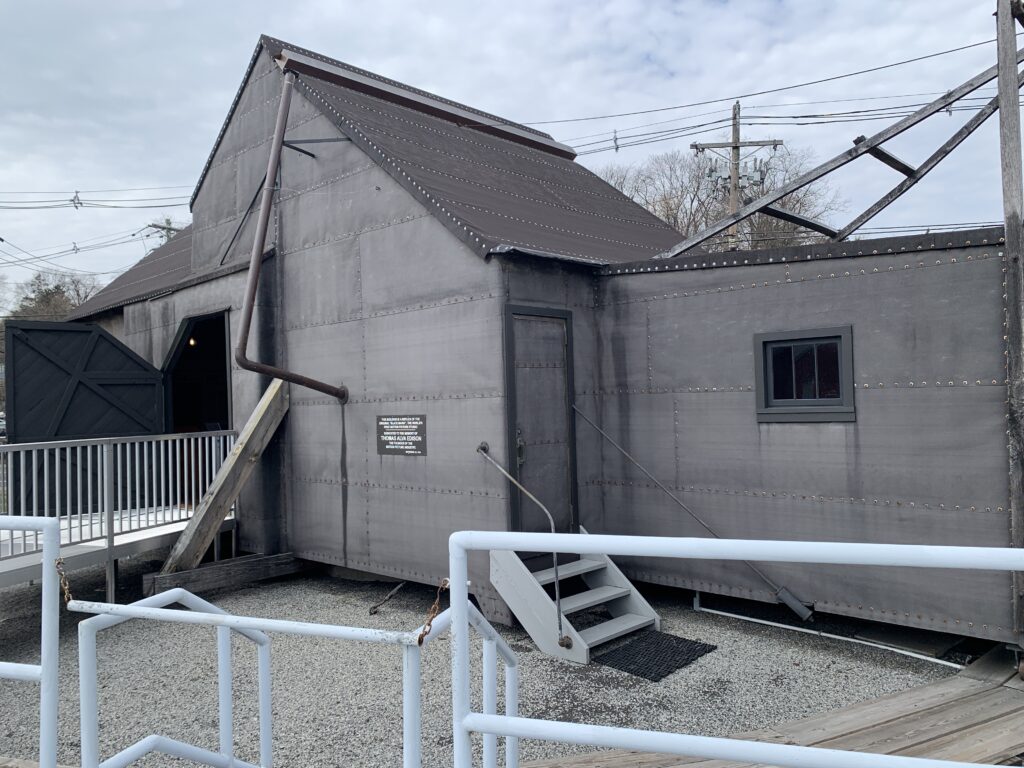
Black Maria is a structure on a round track so it could be rotated to capture natural light. Inside is information about the development of motion pictures and a few costumes kids can use to pretend they are making their own motion picture.
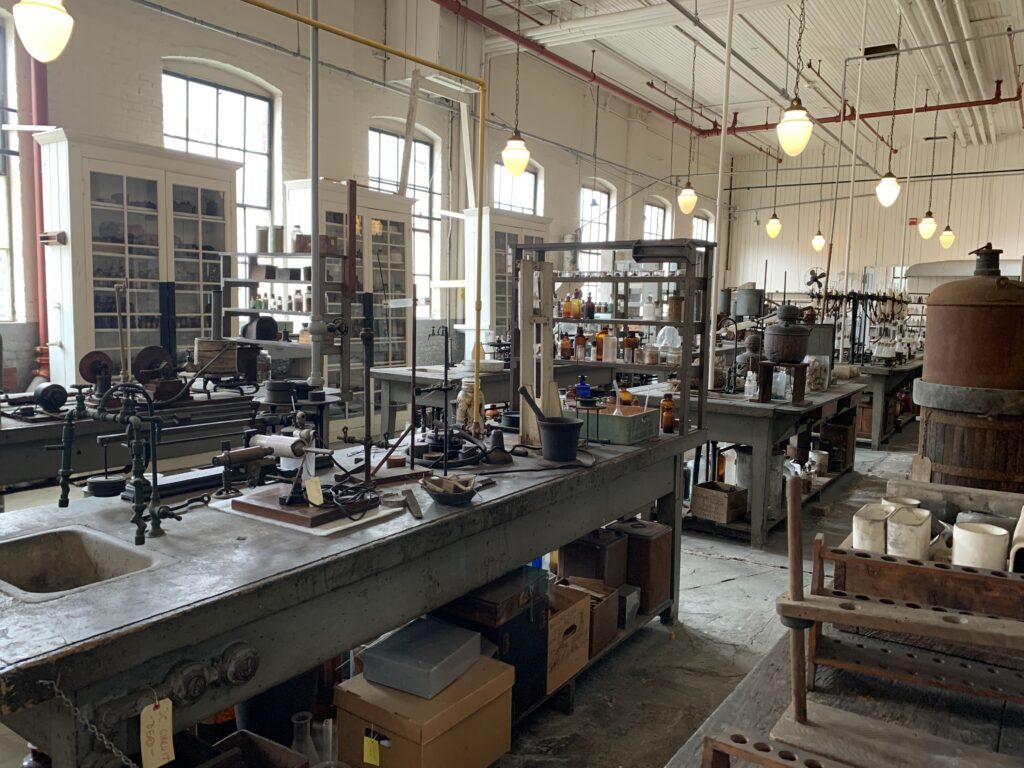
You can enter the chemistry lab but can only walk around near the entrance. The lab looks exactly like it did the last day that it was used for experimentation. Throughout the day, volunteers give talks about the work and experiments that occurred there. You can only peer inside the chemical storage and pattern shop and the metallurgical laboratory, not enter them.
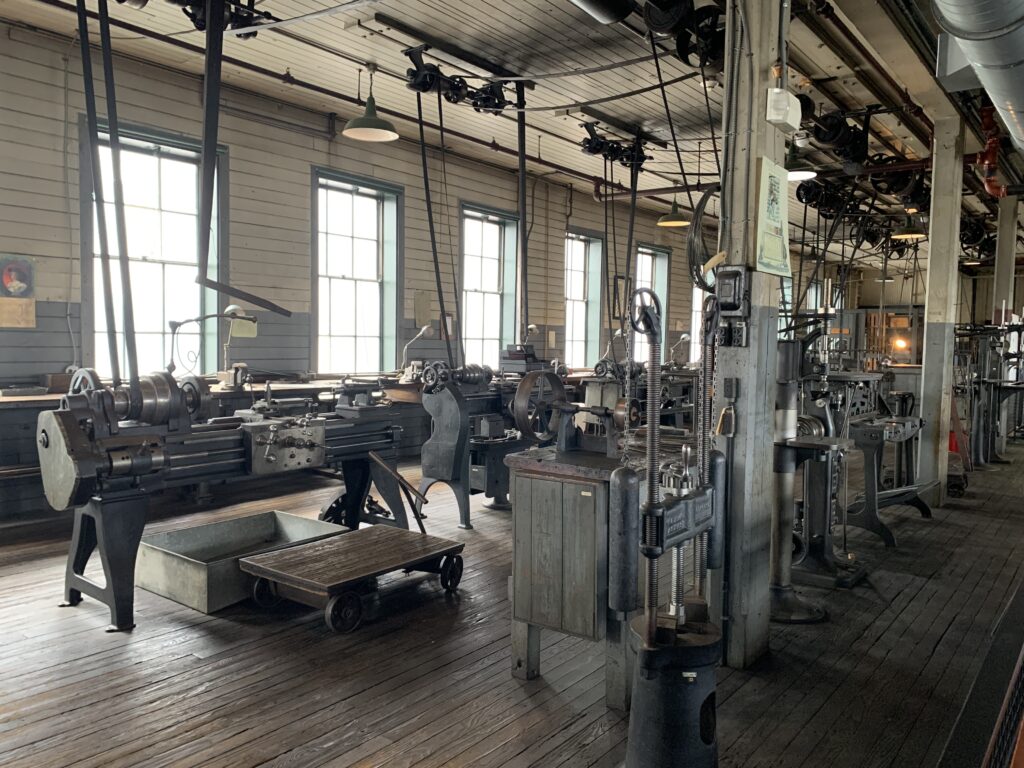
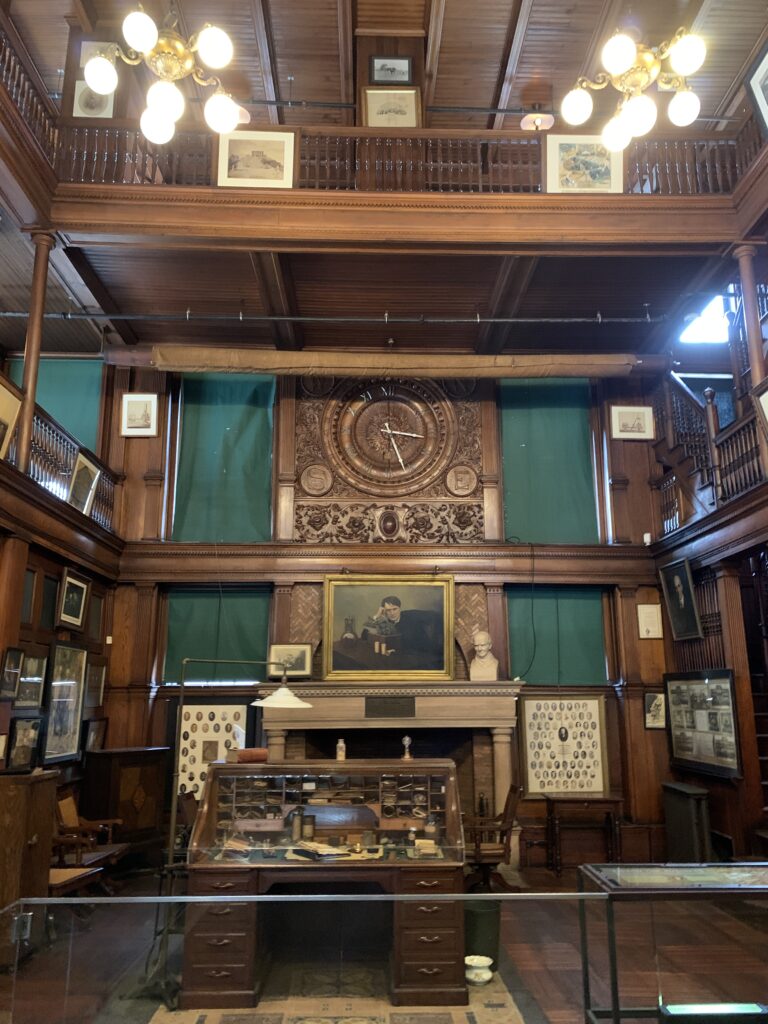
The main building of interest is the main laboratory. This 3-story building is full of equipment and inventions, as well as housing Edison’s library/office. We were able to attend a program where the volunteer talked about Edison’s work in developing the phonograph and played several of his original recordings for us. The volunteer in the library gave us more information about Edison and pointed out the bed that his wife eventually had placed in the office because of all the late nights Edison spent there. The main building also has some child friendly, hands-on exhibits and a cell phone audio tour.
Unfortunately, when we visited, Glenmont Estate was closed for renovations so we were unable to tour the house or visit the grounds. Typically the grounds are open for a self-guided cell phone tour and the house is open for guided tours (ticket required). House tour tickets can be reserved ahead of time online for $1. Limited tickets may be available at the laboratory complex visitor center on the day of your visit. All entry to Glenmont Estate requires you to get a free pass from the visitor center before you can drive onto the grounds. Plan on arriving at the visitor center at least 30 minutes before your tour time to allow time to get your pass and drive to Glenmont Estate (about 1 mile away).
My Takeaway
I would have liked to tour Glenmont Estate but even without being able to, I still felt that Thomas Edison National Historical Park was worth visiting. Marie had read about Thomas Edison in science class and I love when we can make real life connections to school topics. I also think it makes us more appreciative of the many modern conveniences we have when we can see the time and effort that went into discovering and developing them. I would recommend a visit to Thomas Edison National Historical Park.